
| Word: Ambucinate Description: Diactin with spines recurved toward the center Category: Architecture of the Skeleton and Spicules of Hexactinellida |
No image available. | Word: Acanthophore Description: Spicule having two to six stout spined rays, typically surrounding the point of insertion of the root tuft in Hyalonema species. Category: Architecture of the Skeleton and Spicules of Hexactinellida |
No image available. | Word: Amararhysis Description: Paleontological term for longitudinal, tunnellike canal opening to the exhalant surface by slit-like apertures. Category: Architecture of the Skeleton and Spicules of Hexactinellida |
|
| Word: Ambucinate Description: Diactin with spines recurved toward the center Category: Architecture of the Skeleton and Spicules of Hexactinellida |
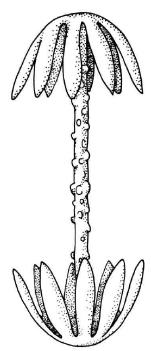
| Word: Amphidisc Description: Dumbbell-shaped microsclere with ends developed into umbel-like expansions. Three size classes, termed macramphidisc, mesamphidisc, micramphidisc Category: Architecture of the Skeleton and Spicules of Hexactinellida |
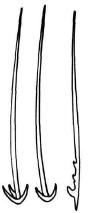
| Word: Anchor Description: Anchor-like spicule, protruding free from the basal part of the sponge; derived from diactine, triactine, or tetractine spicules, with terminal rays or spines, curved in the proximal direction along the main ray Category: Architecture of the Skeleton and Spicules of Hexactinellida |
No image available. | Word: Apochete Description: Exhalant canal in fossil sponges. Category: Architecture of the Skeleton and Spicules of Hexactinellida |
No image available. | Word: Apopore Description: To be rejected; in fossil sponges, an opening forming an exit from an apochete (= osculum). Category: Architecture of the Skeleton and Spicules of Hexactinellida |
No image available. | Word: Aporhysis Description: In fossil sponges, canal closed at the outer end (cf. epirhysis). Category: Architecture of the Skeleton and Spicules of Hexactinellida |
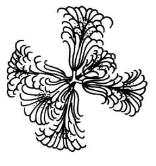 | Word: Aspidoplumicome Description: Hexaster with numerous S-shaped terminal rays whose external curved ends form several successive tiers Category: Architecture of the Skeleton and Spicules of Hexactinellida |
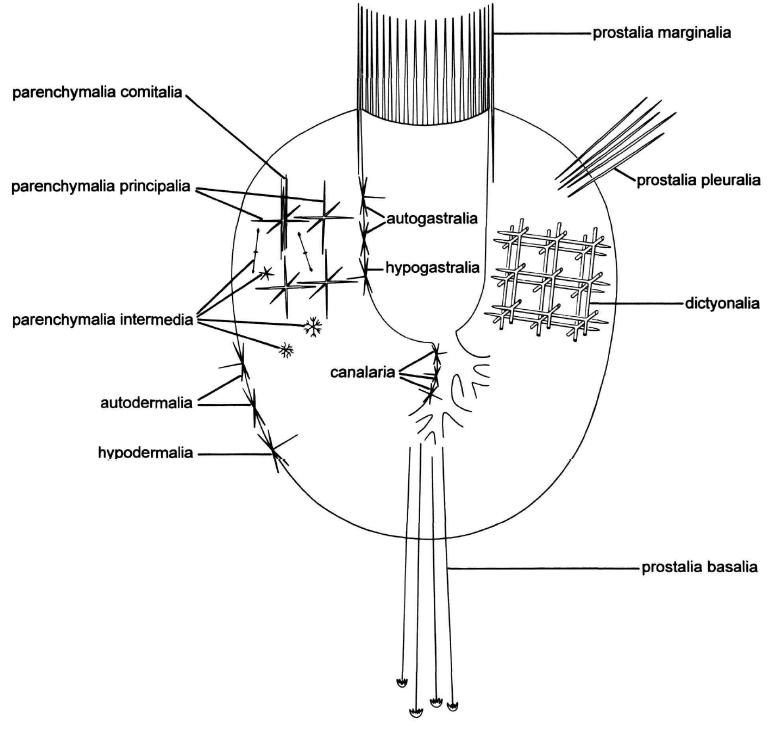
| Word: Autodermalia Description: Dermalia belonging wholly or at least primarily to the outer bounding skin, without actin protruding inside the sponge body Category: Architecture of the Skeleton and Spicules of Hexactinellida |
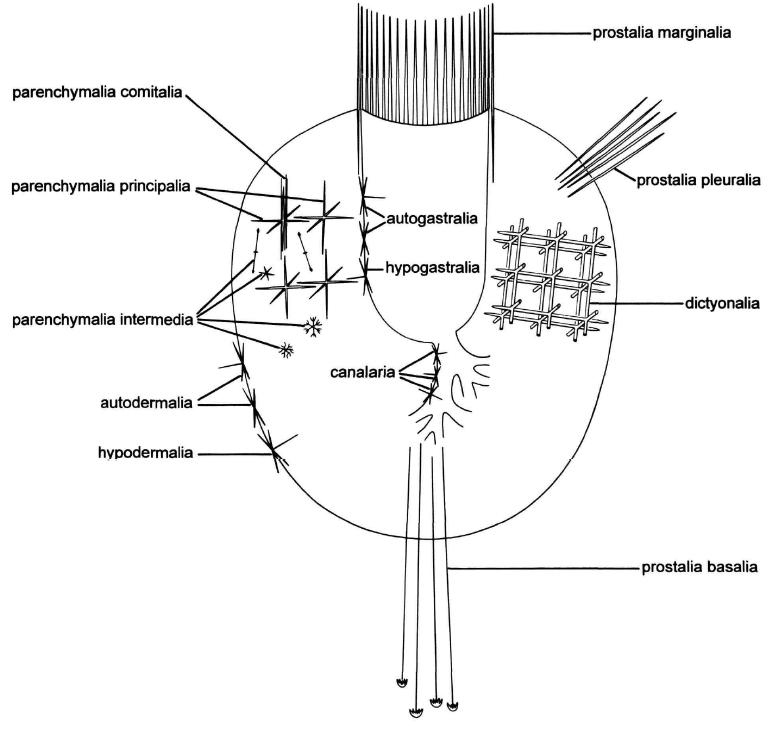
| Word: Autogastralia Description: Gastralia with one actin protruding into the atrium Category: Architecture of the Skeleton and Spicules of Hexactinellida |
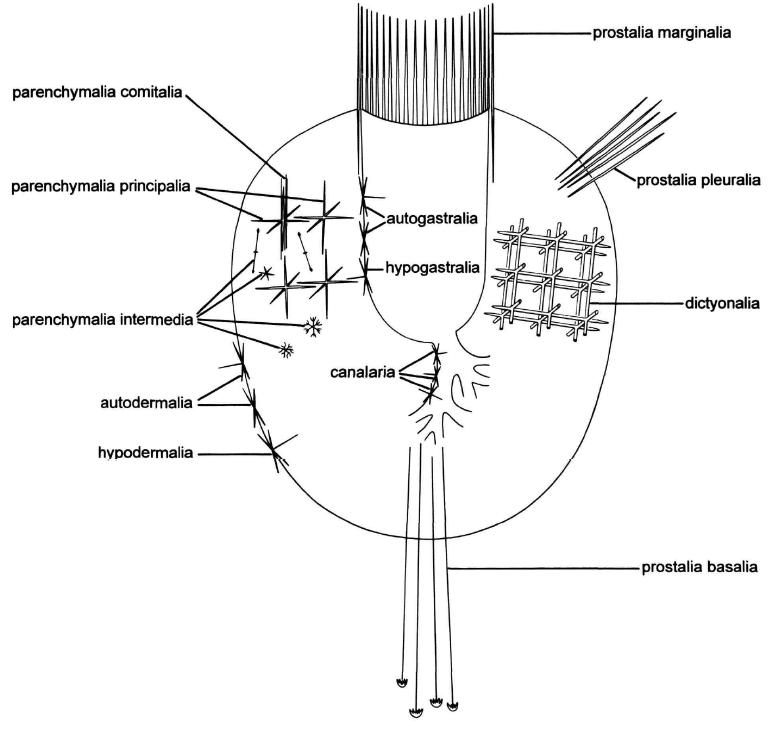
| Word: Basalia Description: Spicules protruding from lower sponge surface; sometimes called root spicules, anchors, barbed basalia; in some species, forming a root tuft Category: Architecture of the Skeleton and Spicules of Hexactinellida |
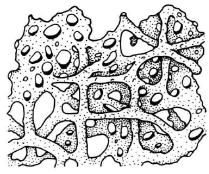 | Word: Basidictyonal plate Description: Rigid basal skeletal framework. Category: Architecture of the Skeleton and Spicules of Hexactinellida |
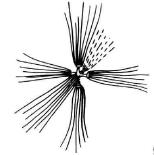 | Word: Calycocome Description: Hexaster with stout main rays and with terminal rays directed outward Category: Architecture of the Skeleton and Spicules of Hexactinellida |
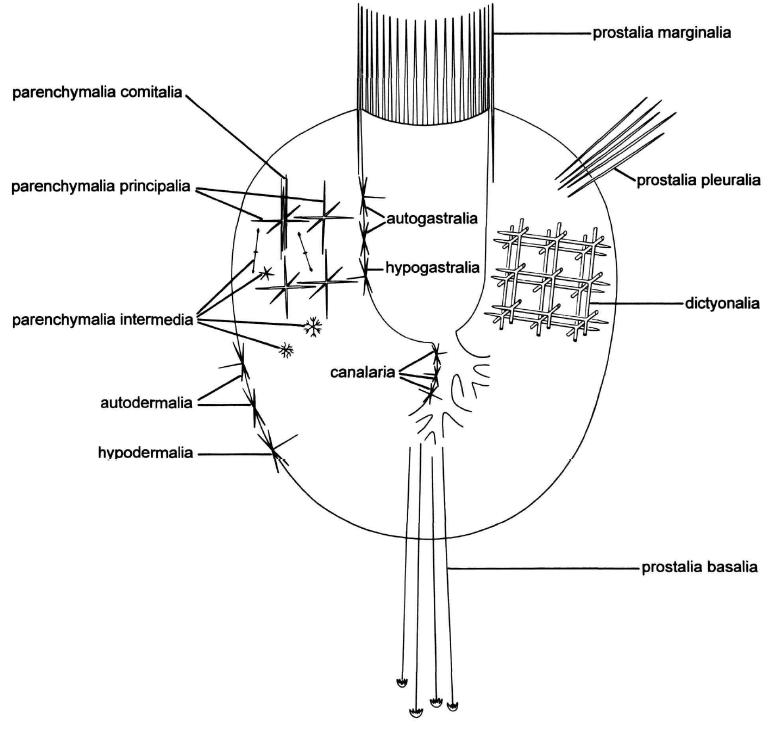
| Word: Canalaria Description: Spicules lining canals Category: Architecture of the Skeleton and Spicules of Hexactinellida |
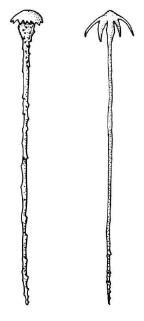
| Word: Clavule Description: Sceptrule with one terminal umbel or with terminal anchor teeth Category: Architecture of the Skeleton and Spicules of Hexactinellida |
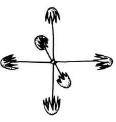 | Word: Codonhexactin Description: Discohexactin with long, dendate, umbel-like structures Category: Architecture of the Skeleton and Spicules of Hexactinellida |
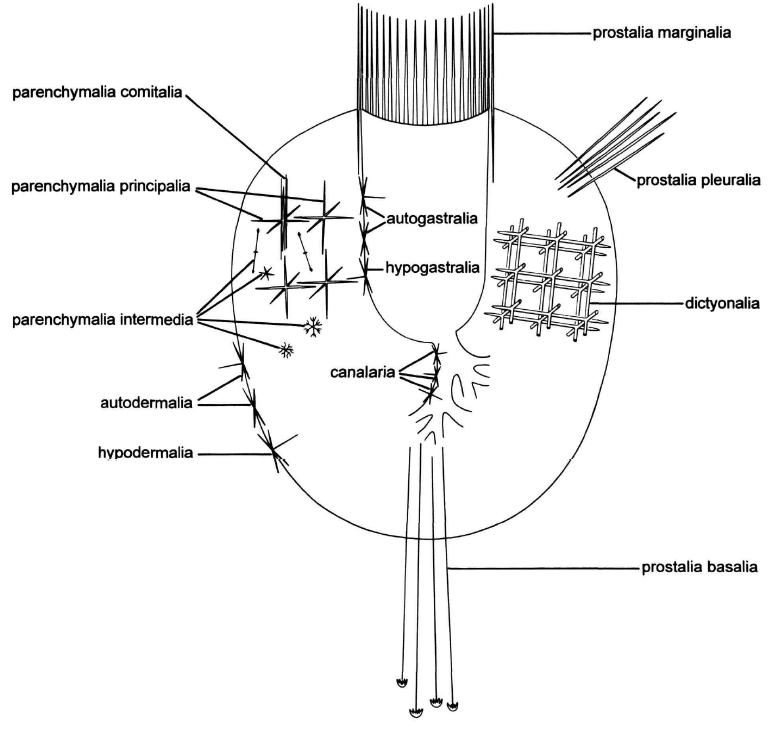
| Word: Comitalia Description: Parenchymalia located close and parallel to principalia Category: Architecture of the Skeleton and Spicules of Hexactinellida |
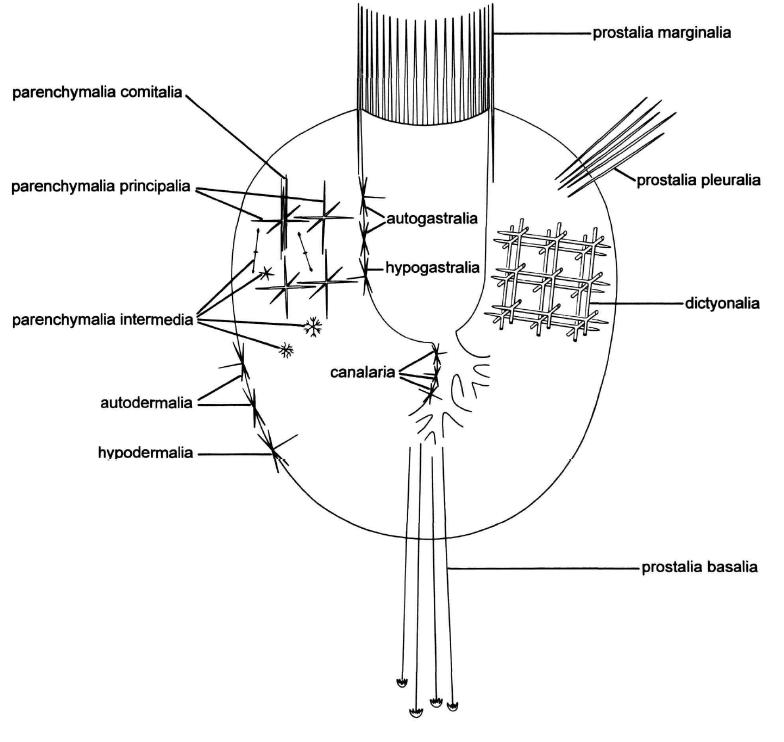
| Word: Dermalia Description: Spicules of the external sponge surface. See AUTODERMALIA, HYPODERMALIA Category: Architecture of the Skeleton and Spicules of Hexactinellida |
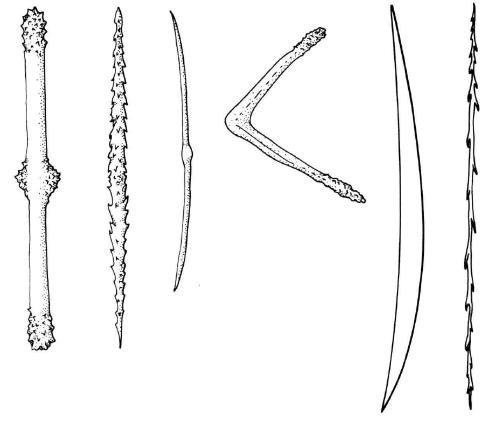
| Word: Diactin Description: Megascleres with two rays and frequently with central swellings indicating the hexactin origin. Category: Architecture of the Skeleton and Spicules of Hexactinellida |
No image available. | Word: Diarhysis Description: In fossil sponges, radial canal in the honeycomb- like skeleton of Aphrocallistidae. Category: Architecture of the Skeleton and Spicules of Hexactinellida |
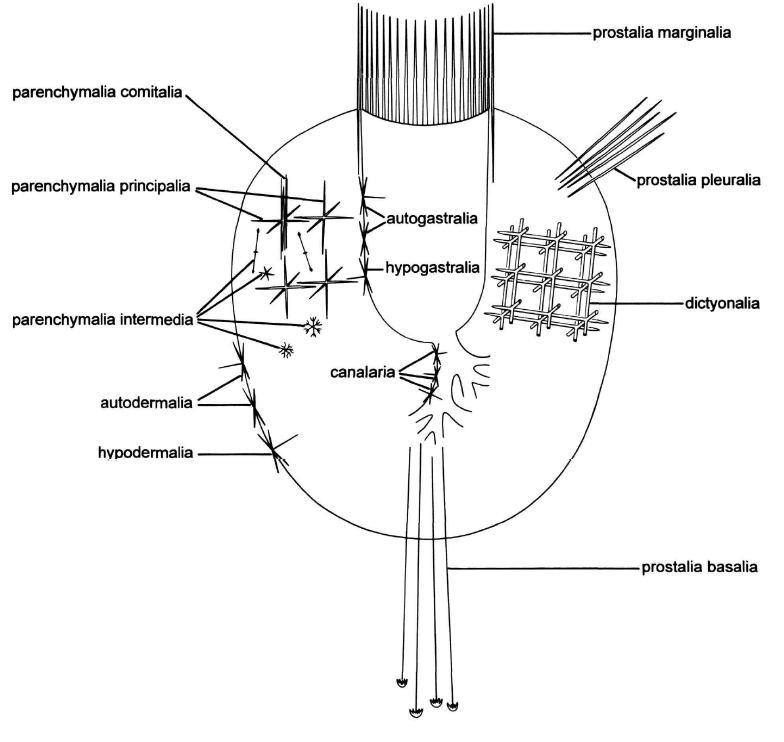
| Word: Dictyonal skeleton (= dictyonine) Description: Three-dimensional network of fused, regular hexactins Category: Architecture of the Skeleton and Spicules of Hexactinellida |
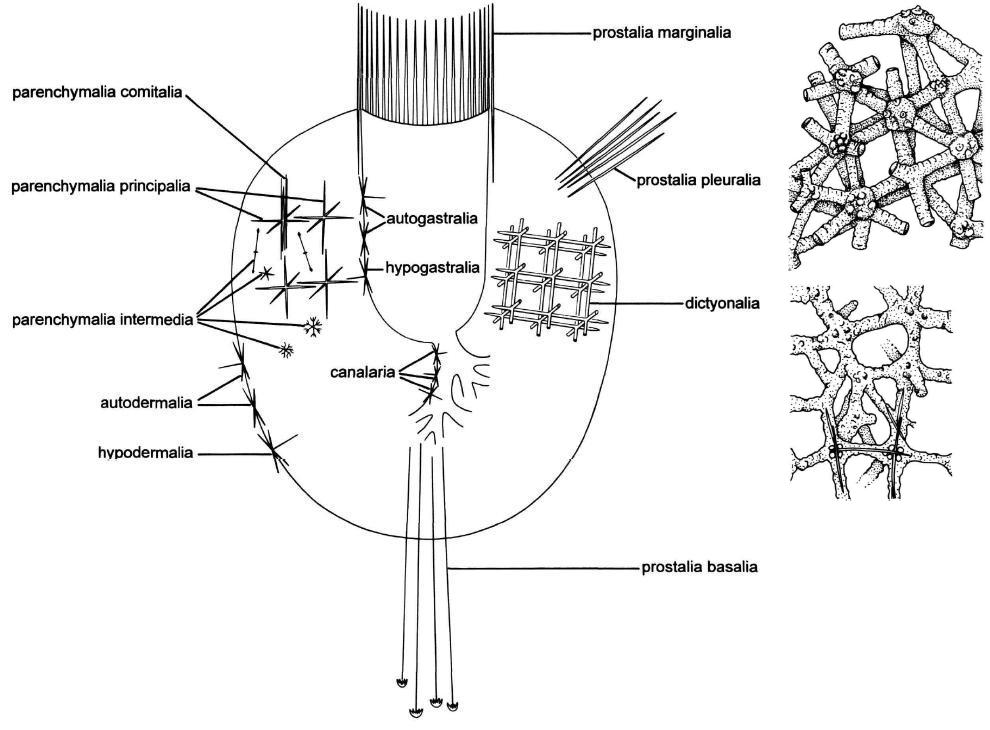
| Word: Dictyonalia Description: Spicules fused into a rigid framework. Category: Architecture of the Skeleton and Spicules of Hexactinellida |
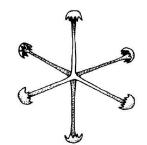 | Word: Discohexactin Description: Hexactin with rays terminating in dentate, umbel-like structures Category: Architecture of the Skeleton and Spicules of Hexactinellida |
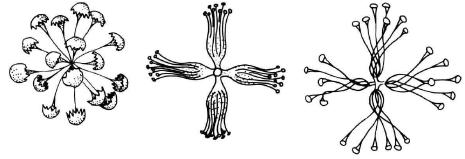
| Word: Discohexaster Description: Hexaster with dentate, umbel-like terminal rays. Category: Architecture of the Skeleton and Spicules of Hexactinellida |
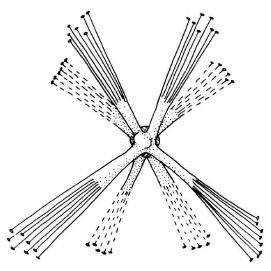
| Word: Discoctaster Description: Octaster with terminal rays ending in umbel-like disks Category: Architecture of the Skeleton and Spicules of Hexactinellida |
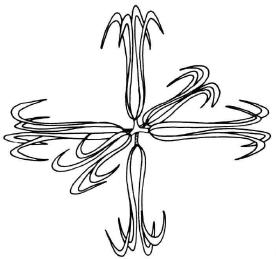
| Word: Drepanocome Description: Hexaster with sickle-like terminations (genus Dictyaulus) Category: Architecture of the Skeleton and Spicules of Hexactinellida |
No image available. | Word: Epirhysis Description: In fossil sponges, canal closed at inner end (cf. aporhysis). Category: Architecture of the Skeleton and Spicules of Hexactinellida |
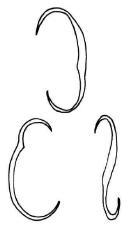
| Word: Fibule Description: Microsclere consisting of two bent rays derived from greatly reduced oxyhexaster (in Holascus fibulatus) Category: Architecture of the Skeleton and Spicules of Hexactinellida |
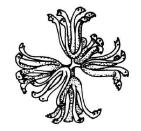 | Word: Floricome Description: Discohexaster with S-shaped terminal rays that end in a plate provided with teeth or claws Category: Architecture of the Skeleton and Spicules of Hexactinellida |
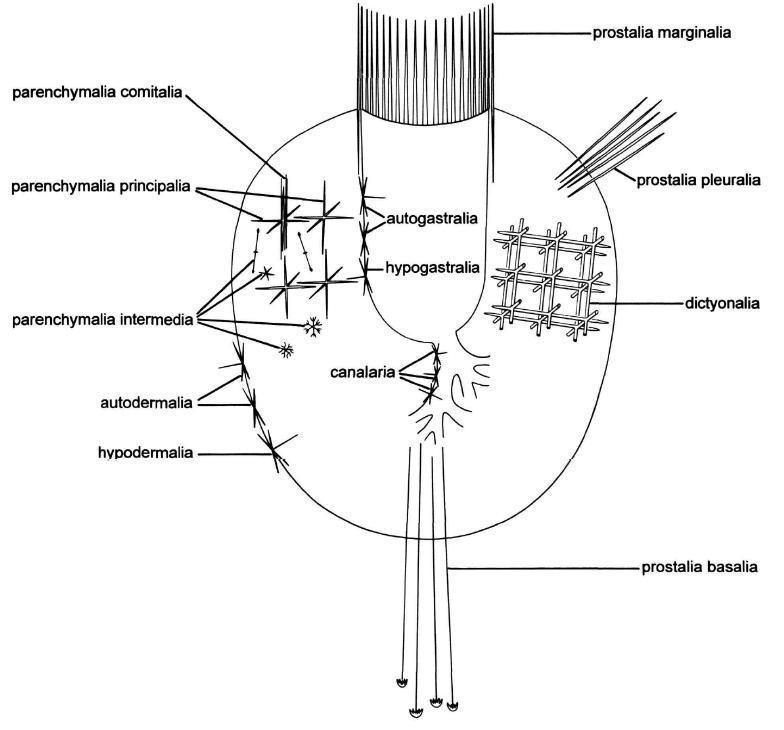
| Word: Gastralia Description: All spicules that line the main exhalant cavity. See AUTOGASTRALIA, HYPOGASTRALIA Category: Architecture of the Skeleton and Spicules of Hexactinellida |
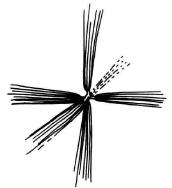 | Word: Graphicome (= graphihexaster) Description: Hexaster with long, thin, parallel branches forming terminal brushes Category: Architecture of the Skeleton and Spicules of Hexactinellida |
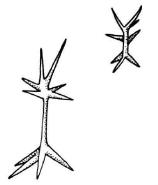 | Word: Hemioxyhexaster Description: Hexaster in which two opposite rays are longer than the other four; the branched rays are reduced or absent (genus Aphrocallistes) Category: Architecture of the Skeleton and Spicules of Hexactinellida |
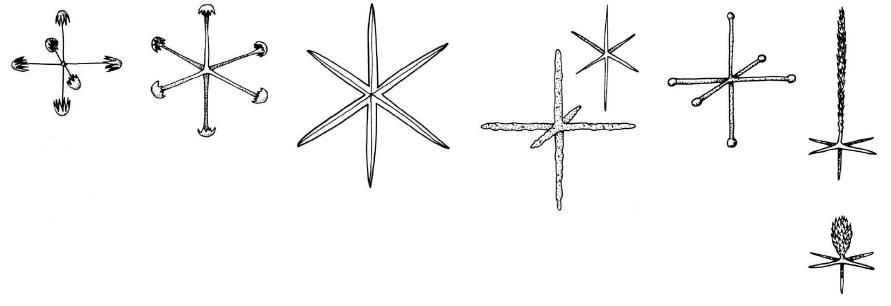
| Word: Hexactin (hexact) Description: Siliceous spicule with six unbranched rays perpendicular to one another. Category: Architecture of the Skeleton and Spicules of Hexactinellida |
No image available. | Word: Hexadisc Description: Microhexactin with six actins ending in amphidisclike umbels Category: Architecture of the Skeleton and Spicules of Hexactinellida |
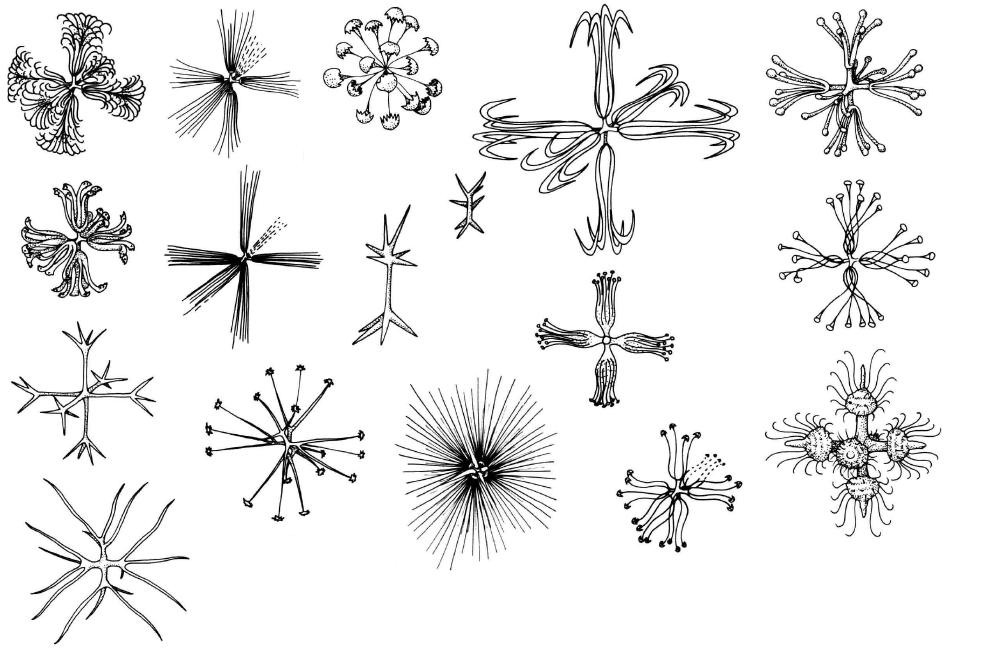
| Word: Hexaster Description: Microsclere with six branched rays. Category: Architecture of the Skeleton and Spicules of Hexactinellida |
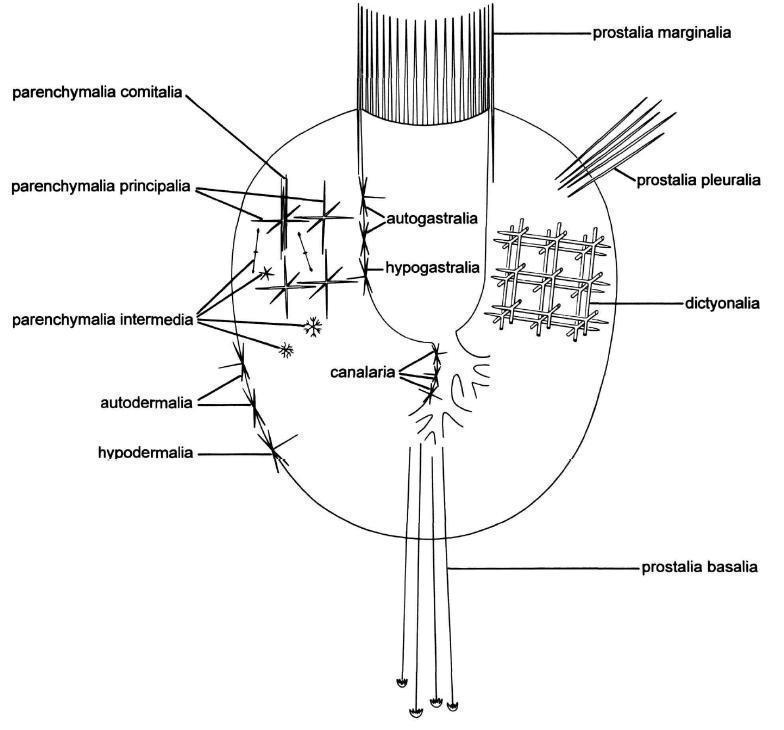
| Word: Hypodermalia Description: Dermalia with one actin protruding inside the body and the other ones tangential to the external surface Category: Architecture of the Skeleton and Spicules of Hexactinellida |
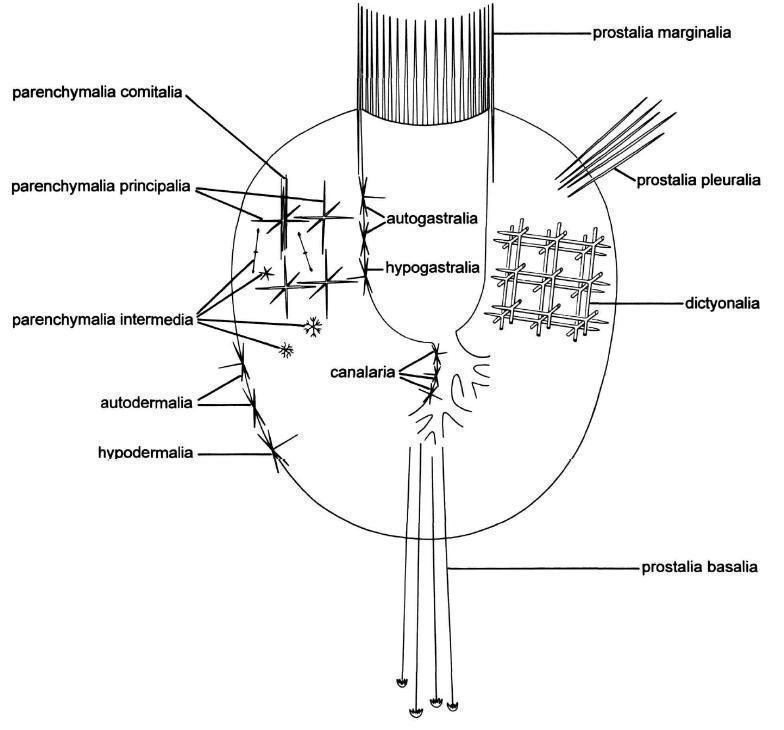
| Word: Hypogastralia Description: Gastralia with one actin protruding inward, the other ones oriented tangentially to the atrium Category: Architecture of the Skeleton and Spicules of Hexactinellida |
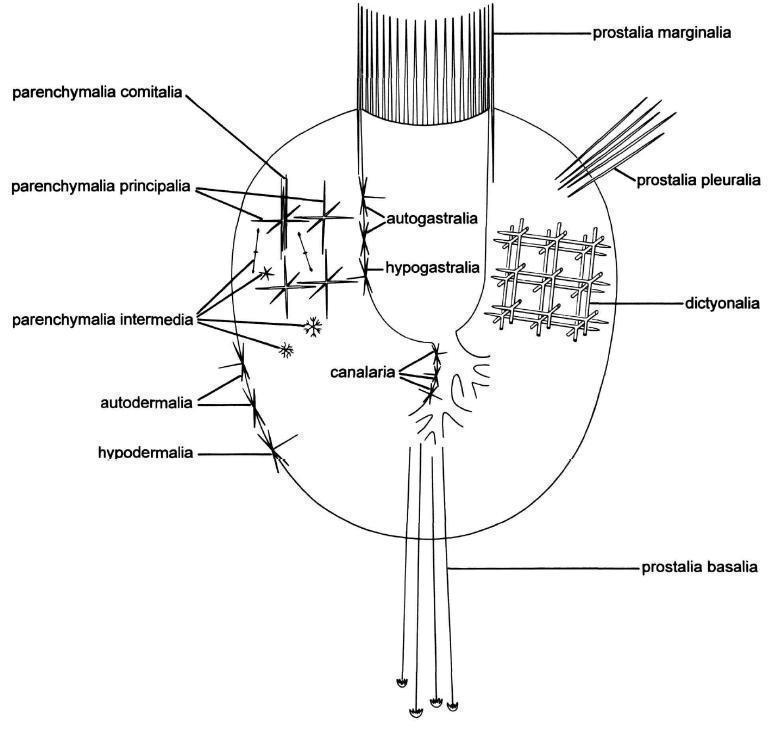
| Word: Intermedia Description: Parenchymalia situated among the principalia or dictyonalia Category: Architecture of the Skeleton and Spicules of Hexactinellida |
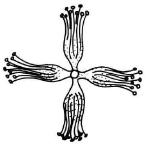 | Word: Lophocome (= lophodiscohexaster) Description: Discohexaster with short, stout main rays and numerous slender secondary rays Category: Architecture of the Skeleton and Spicules of Hexactinellida |
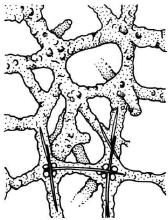
| Word: Lychnisc Description: Hexactin with a center resembling a perforated octohedron; building block of fused (dictyonal) framework called LYCHNISCA (lower two lychnics shown in optical section). Category: Architecture of the Skeleton and Spicules of Hexactinellida |
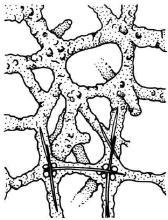
| Word: Lychnisca Description: Dictyonal hexactin framework formed by lychnises Category: Architecture of the Skeleton and Spicules of Hexactinellida |
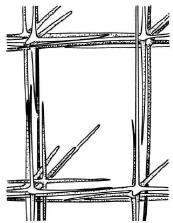
| Word: Lyssacine Description: Spicular framework formed by the juxtaposition and interlacing of elongate rays of hexactins Category: Architecture of the Skeleton and Spicules of Hexactinellida |
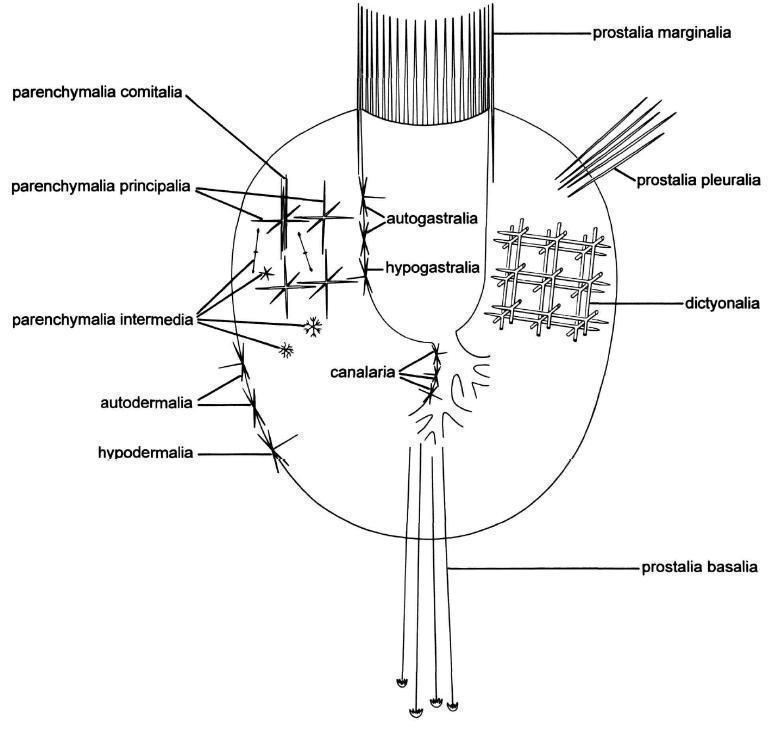
| Word: Marginalia Description: Prostalia that project in a wreath-like arrangement from the oscular margin Category: Architecture of the Skeleton and Spicules of Hexactinellida |
No image available. | Word: Microhexactin Description: Hexactin microsclere. Category: Architecture of the Skeleton and Spicules of Hexactinellida |
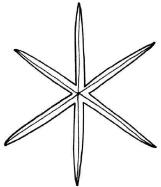 | Word: Microholactin Description: Large category of microscleres lacking spines and appendages (Monorhaphis) Synonyms: Holactin Category: Architecture of the Skeleton and Spicules of Hexactinellida |
No image available. | Word: Octactin Description: Spicule with eight rays, generally six in one plane, the other two perpendicular to them. Category: Architecture of the Skeleton and Spicules of Hexactinellida |
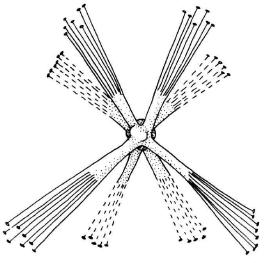
| Word: Octaster Description: Octactin microsclere with branched rays. Category: Architecture of the Skeleton and Spicules of Hexactinellida |
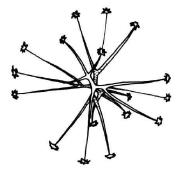 | Word: Onychaster (= onychohexaster, onychohexactin) Description: Hexaster with terminal rays ending in four actins that are perpendicular to the rays Category: Architecture of the Skeleton and Spicules of Hexactinellida |
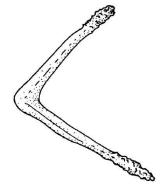 | Word: Orthodiactin Description: Diactin in which the two rays belong to different axes of a triaxon and form an angle of 90 degrees Category: Architecture of the Skeleton and Spicules of Hexactinellida |
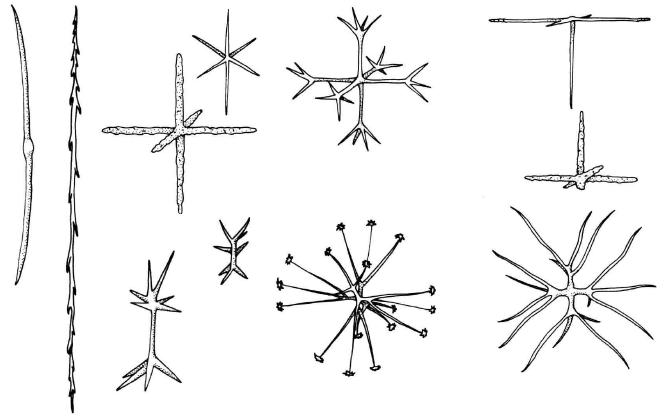
| Word: Oxy- Description: Prefix referring to radiate spicule types with rays gradually tapering to a point. Category: Architecture of the Skeleton and Spicules of Hexactinellida |
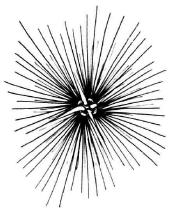
| Word: Pappocome Description: Graphicome-like spicule with diverging terminal rays Category: Architecture of the Skeleton and Spicules of Hexactinellida |
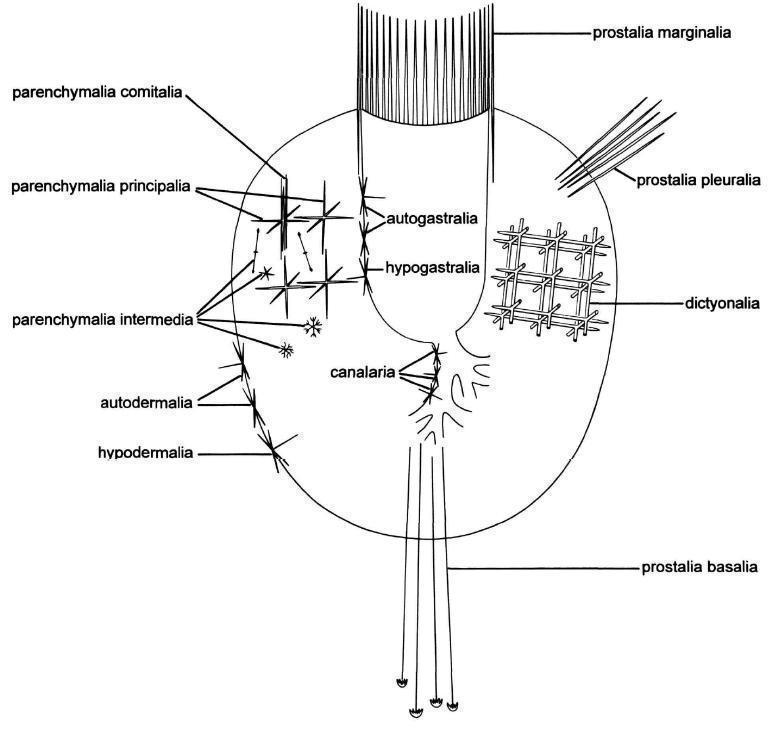
| Word: Parenchymalia Description: All spicules in the choanosome Category: Architecture of the Skeleton and Spicules of Hexactinellida |
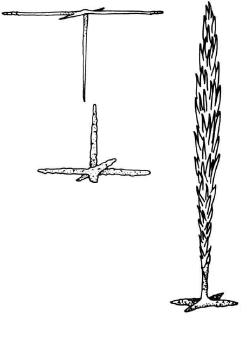
| Word: Pentactin (pentact) Description: Five-rayed spicule. Category: Architecture of the Skeleton and Spicules of Hexactinellida |
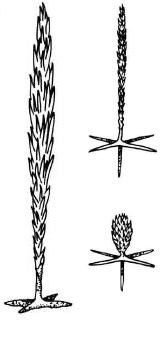
| Word: Pinule Description: Pentact or hexact spicule with four basal rays and one perpendicular ray ornamented by obliquely set spines directed distally. Category: Architecture of the Skeleton and Spicules of Hexactinellida |
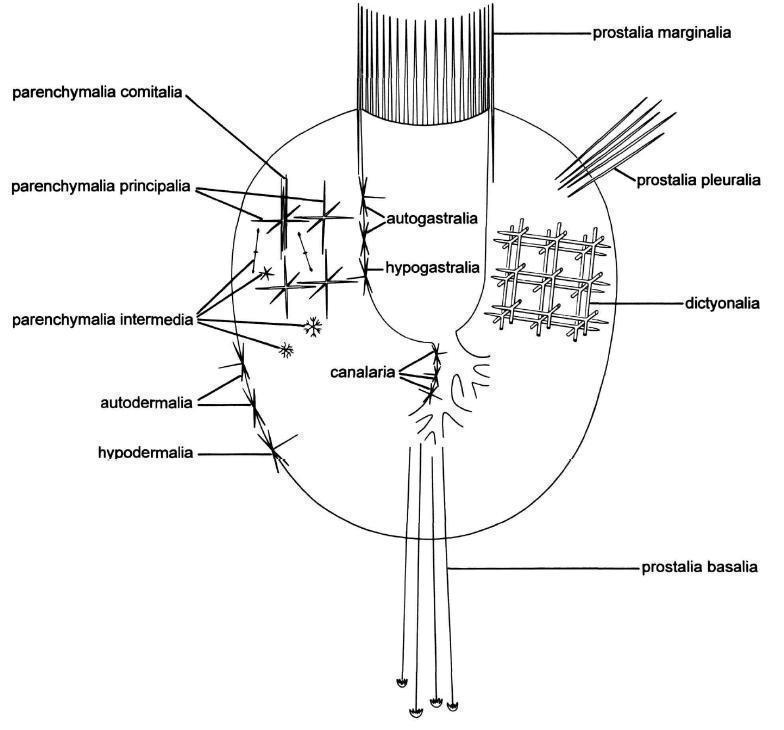
| Word: Pleuralia Description: Spicules protruding from lateral surface. Category: Architecture of the Skeleton and Spicules of Hexactinellida |
No image available. | Word: Posticum Description: Cf. apopore (= osculum); in fossil sponges. Category: Architecture of the Skeleton and Spicules of Hexactinellida |
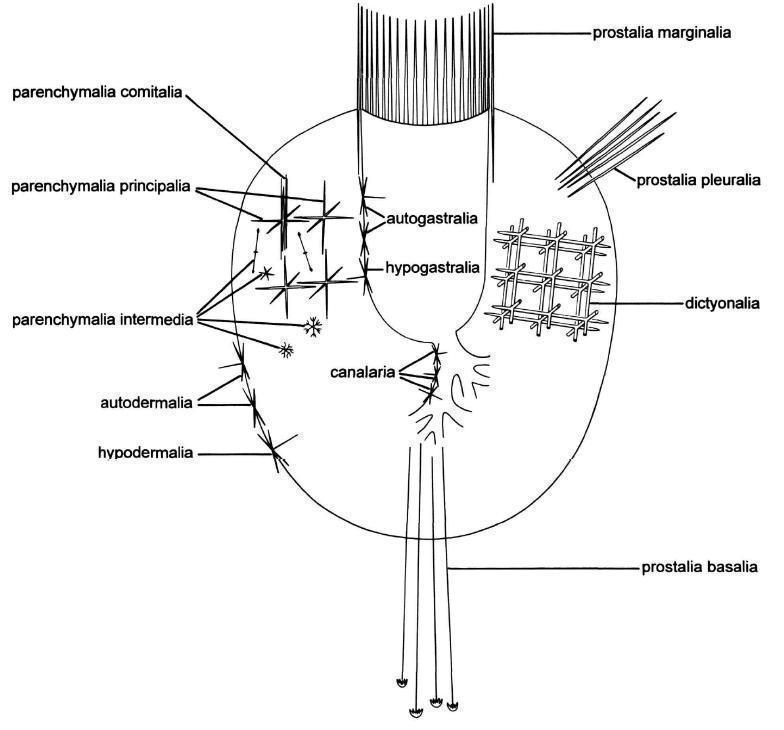
| Word: Principalia Description: Spicules making up main skeletal framework Category: Architecture of the Skeleton and Spicules of Hexactinellida |
No image available. | Word: Prosochete Description: In fossil sponges, inhalant canal leading to prosopore. Category: Architecture of the Skeleton and Spicules of Hexactinellida |
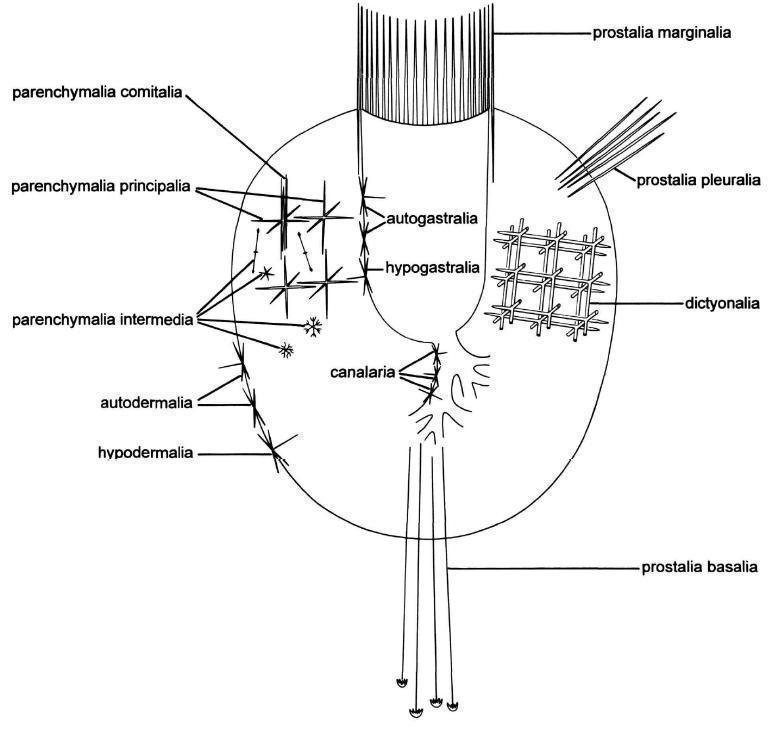
| Word: Prostalia Description: Spicules protruding from a surface Category: Architecture of the Skeleton and Spicules of Hexactinellida |
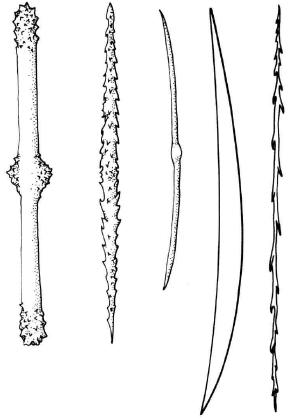
| Word: Rhabdodiactin Description: Diactin in which the two rays are aligned in a single axis. Category: Architecture of the Skeleton and Spicules of Hexactinellida |

| Word: Sarule Description: Sceptrule with one end swollen and ornamented with distally directed spines Category: Architecture of the Skeleton and Spicules of Hexactinellida |

| Word: Scepter Description: Uncinate marginalia, with spiny shaft acerated at one end; terminating in four very short actins at the other (Pheronematidae, genus Semperella) Category: Architecture of the Skeleton and Spicules of Hexactinellida |
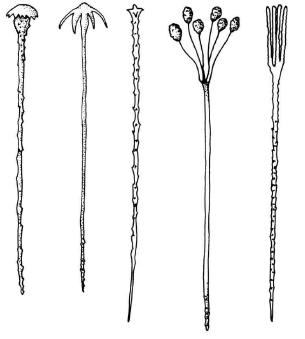
| Word: Sceptrule Description: A small, prostal monactin spicule exhibiting peculiar secondary developments at one end (order Hexactinosa). Category: Architecture of the Skeleton and Spicules of Hexactinellida |
No image available. | Word: Schizorhysis Description: In fossil sponges, continuous system of interconected canal spaces (Tretodictyidae). Category: Architecture of the Skeleton and Spicules of Hexactinellida |
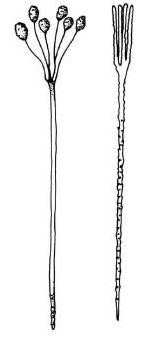
| Word: Scopule Description: Fork-like sceptrule with one end branched (leptoscopule, pachyscopule). Category: Architecture of the Skeleton and Spicules of Hexactinellida |
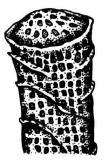 | Word: Sieve-plate Description: Perforated plate that covers the broad terminal opening of some tubular Hexactinellida (Euplectella spp.) Category: Architecture of the Skeleton and Spicules of Hexactinellida |
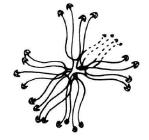 | Word: Sigmatocome Description: Hexaster with long, S-shaped terminal rays (Dictyaulus) Category: Architecture of the Skeleton and Spicules of Hexactinellida |
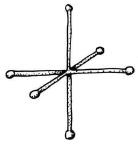 | Word: Sphaerohexactin (sphaerohexact) Description: Hexactin with rays ending in spherical knobs Category: Architecture of the Skeleton and Spicules of Hexactinellida |
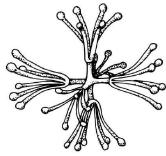 | Word: Sphaerohexaster Description: Hexaster with terminal rays ending in spherical knobs Category: Architecture of the Skeleton and Spicules of Hexactinellida |
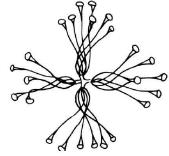 | Word: Spirodiscohexaster Description: Discohexaster with a bunch of terminal, spirally twisted rays (genus Rhabdodictyum) Category: Architecture of the Skeleton and Spicules of Hexactinellida |
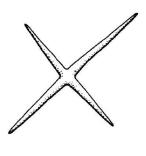 | Word: Stauractin Description: Reduced hexactin with four rays all arranged in one plane Category: Architecture of the Skeleton and Spicules of Hexactinellida |
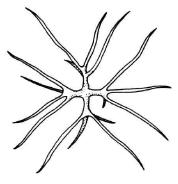 | Word: Stauraster Description: Reduced hexaster with four rays all arranged in one plane Category: Architecture of the Skeleton and Spicules of Hexactinellida |
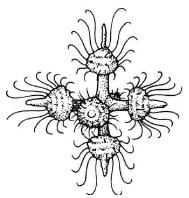 | Word: Strobiloplumicome Description: Plumicome with numerous slender terminal rays arranged in two concentric circles Category: Architecture of the Skeleton and Spicules of Hexactinellida |
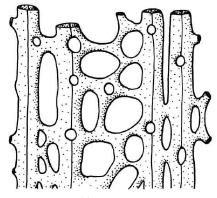 | Word: Synapticule Description: Bridges composed of siliceous cement joining spicules Category: Architecture of the Skeleton and Spicules of Hexactinellida |
No image available. | Word: Tauactin Description: Large, smooth triactin (genus Monorhaphis). Category: Architecture of the Skeleton and Spicules of Hexactinellida |
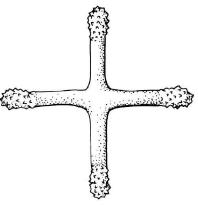
| Word: Tetractin Description: Spicule with four rays in one plane Category: Architecture of the Skeleton and Spicules of Hexactinellida |
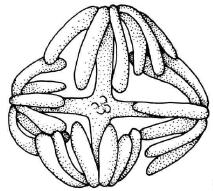 | Word: Tetradisc Description: Microsclere with four actins ending in amphidisc like umbels Category: Architecture of the Skeleton and Spicules of Hexactinellida |

| Word: Tignule Description: Gigantic, isolated diactin (Hyalonema toxeres). Category: Architecture of the Skeleton and Spicules of Hexactinellida |
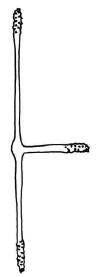
| Word: Triactin Description: Spicule with three rays in one plane Category: Architecture of the Skeleton and Spicules of Hexactinellida |
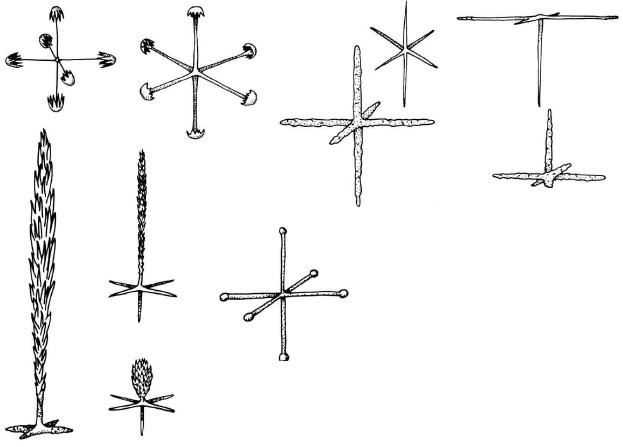
| Word: Triaxone Description: Spicule with three axes. Category: Architecture of the Skeleton and Spicules of Hexactinellida |
No image available. | Word: Trichaster Description: Graphicome (genus Trichasterina). Category: Architecture of the Skeleton and Spicules of Hexactinellida |

| Word: Uncinate Description: Diactin covered with short spines directed distally (barbule); size classes are designated by macrouncinate, microuncinate Synonyms: Barbule , macruncinate , micruncinate Category: Architecture of the Skeleton and Spicules of Hexactinellida |